IUI

IUI

Embryo Freezing in Chennai: Cost, Process & When It’s Recommended

Embryo Freezing in Chennai: Cost, Process & When It’s Recommended Home IVF April 14, 2026 Introduction Starting or growing a family is one of life’s most meaningful journeys — but for many couples, that path comes with unexpected challenges. If you’re exploring fertility options, you may have come across the term embryo freezing in Chennai and wondered whether it’s the right choice for you. Embryo freezing, also called embryo cryopreservation, is a fertility preservation technique that gives couples more flexibility and hope in their parenthood journey. Whether you’re undergoing IVF, planning for the future, or facing a medical situation that may affect your fertility, this option can be a life-changing step. At Promise Fertility Center in Tambaram, Chennai, we understand how deeply personal these decisions are. This article will walk you through what embryo freezing involves, when it’s recommended, what it costs, and what you can realistically expect — so you can make an informed, confident decision. What Is Embryo Freezing? Embryo cryopreservation is the process of fertilizing eggs with sperm in a laboratory, allowing them to develop into embryos, and then freezing and storing those embryos for future use. The embryos are preserved using a technique called vitrification — an ultra-rapid freezing method that prevents ice crystal formation and protects the embryo’s cellular structure. This method has significantly improved the survival rate of frozen embryos compared to older slow-freezing techniques. Once frozen, embryos can be stored safely for several years without significant loss in quality. When the couple is ready, the embryos are thawed and transferred to the uterus in a procedure known as a frozen embryo transfer (FET). When Is Embryo Freezing Recommended? Embryo freezing is not just for one type of patient. There are several situations where your fertility specialist may recommend it: During an IVF cycle: When multiple good-quality embryos are produced during IVF, only one or two are typically transferred at a time. Freezing the remaining embryos allows couples to use them in future cycles without going through the full stimulation process again. Medical or health reasons: Individuals diagnosed with cancer or other serious conditions may choose to freeze embryos before undergoing chemotherapy, radiation, or surgeries that could affect fertility. Poor uterine conditions at the time of retrieval: Sometimes the uterine lining is not optimal for implantation during the fresh embryo transfer cycle. Freezing the embryos and transferring them in a later, prepared cycle can improve success rates. Genetic testing (PGT): If preimplantation genetic testing is recommended, embryos need to be frozen while the results are awaited before a safe transfer can take place. Family planning for the future: Some couples prefer to freeze embryos when they are younger to preserve better-quality eggs and embryos for use later in life. The Embryo Freezing Process: Step by Step Understanding the process can help ease anxiety. Here is a general overview of what to expect: Step 1 — Ovarian Stimulation Hormonal injections are given over 10–14 days to stimulate the ovaries to produce multiple eggs. Monitoring through blood tests and ultrasounds is done throughout this phase. Step 2 — Egg Retrieval Mature eggs are retrieved through a minor procedure under sedation. This is done in a clinical setting and usually takes about 20–30 minutes. Step 3 — Fertilization The retrieved eggs are fertilized in the laboratory using sperm from the partner or a donor. The fertilized eggs develop into embryos over the next 3–5 days. Step 4 — Embryo Vitrification (Freezing) Healthy embryos that meet quality criteria are frozen using vitrification and stored in the embryology lab under controlled conditions. Step 5 — Frozen Embryo Transfer (FET) When you’re ready for a transfer, the uterine lining is prepared with hormonal support. The chosen embryo is thawed and carefully placed into the uterus. A pregnancy test is done approximately 10–14 days later. How Long Can Embryos Be Frozen? This is one of the most common questions we hear from patients in Chennai. Embryos can be safely stored for many years. Research indicates that embryos frozen for 5–10 years have been successfully used to achieve pregnancies. The quality of the embryo at the time of freezing plays a greater role in outcomes than the length of storage. Storage duration is governed by guidelines from regulatory bodies including the ICMR (Indian Council of Medical Research). Your fertility specialist will discuss storage timelines and renewal options with you during your consultation. Frozen Embryo Transfer Success Rate in Chennai Success rates vary based on several factors and should always be understood in context. Key factors that influence frozen embryo transfer success rates include: The woman’s age at the time of egg retrieval The quality and developmental stage of the frozen embryos The number of previous IVF attempts The underlying cause of infertility The health of the uterine lining at the time of transfer It’s important to approach success rate discussions with realistic expectations. Embryo freezing and FET have shown promising outcomes in reproductive medicine, but no fertility clinic can ethically guarantee pregnancy. At Promise Fertility Center, we always present realistic expectations backed by clinical data specific to your individual situation. How Much Does Embryo Freezing Cost in Chennai? Cost is an understandable concern, and we believe in transparency. Embryo freezing in Chennai typically involves costs across several components: Ovarian stimulation medications — This can vary significantly based on your protocol and response Egg retrieval procedure Laboratory and embryology fees — Includes fertilization, embryo culture, and vitrification Annual embryo storage fees Frozen embryo transfer (FET) cycle costs — Includes lining preparation, embryo thaw, and transfer The total cost of embryo freezing in Chennai can range widely depending on the clinic’s infrastructure, the medications required, and the number of cycles needed. At Promise Fertility Center, we offer transparent pricing discussions during your consultation so there are no surprises along the way. We understand that fertility treatment is a significant financial and emotional investment. Our team will guide you through all available options and help you plan accordingly. Promise Fertility Center’s Approach to Embryo

IUI, IVF

Choosing Between IVF and IUI: Expert Guidance in Chennai

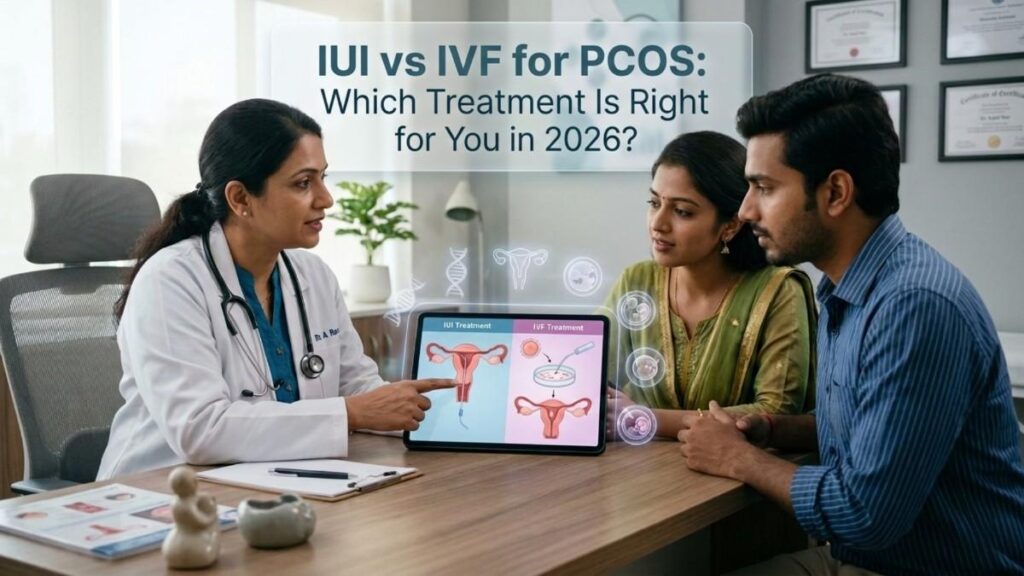
Choosing Between IVF and IUI: Expert Guidance in Chennai Home IVF April 11, 2026 Introduction One of the most common questions couples ask when they begin exploring fertility treatment is also one of the most important: should we start with IUI or go straight to IVF? When you are already carrying the weight of infertility, navigating the difference between these two treatments — and understanding which one actually makes sense for your situation — can feel confusing and overwhelming. The IVF vs IUI Chennai conversation is not one-size-fits-all. The right answer depends entirely on your diagnosis, your age, how long you have been trying, and several other clinical factors that only a thorough fertility evaluation can reveal. What works well for one couple may not be appropriate for another. This article is designed to help you understand exactly what IUI and IVF involve, how they differ in terms of process, invasiveness, cost, and success rates, who each treatment is best suited for, and when it makes clinical sense to move from one to the other. At Promise Fertility Center in Tambaram, Chennai, we help couples make this decision with confidence — guided by evidence, not guesswork. What Is IUI? IUI — Intrauterine Insemination — is one of the least invasive forms of fertility treatment available. It works by placing a prepared, concentrated sample of sperm directly into the uterus at the time of ovulation, reducing the distance sperm must travel to reach the egg and increasing the number of sperm available at the site of fertilization. The IUI process typically involves: Ovulation monitoring — either through natural cycle tracking or mild hormonal stimulation to trigger or time ovulation more precisely Semen preparation — the sperm sample is washed and concentrated in the laboratory to select the most motile and healthy sperm Insemination — a thin, flexible catheter is used to gently place the prepared sperm into the uterine cavity The procedure itself takes only a few minutes, is generally painless, and requires no anaesthesia. Most women resume normal activities the same day. What Is IVF? IVF — In Vitro Fertilization — is a more advanced assisted reproductive technology. Unlike IUI, where fertilization still occurs inside the body, IVF moves the fertilization process entirely outside the body — into a specialized laboratory environment. The IVF process involves: Ovarian stimulation — hormonal injections over 10–14 days to stimulate the ovaries to develop multiple mature eggs Egg retrieval — a minor surgical procedure under sedation to collect the mature eggs directly from the ovaries Fertilization — eggs are combined with sperm in the laboratory, either through conventional insemination or ICSI Embryo culture — fertilized embryos are monitored and developed in the lab for 3 to 5 days Embryo transfer — one or more healthy embryos are transferred into the uterus Luteal support — progesterone medication supports early implantation following transfer IVF is a more involved, more intensive, and more expensive process than IUI — but it also offers significantly higher success rates per cycle and greater control over the fertilization and embryo selection process. IUI vs IVF: A Clear Comparison Factor IUI IVF Where fertilization occurs Inside the body In the laboratory Invasiveness Minimal Moderate (egg retrieval required) Ovarian stimulation Mild or none Controlled ovarian stimulation Monitoring required Moderate Intensive Laboratory involvement Sperm preparation only Full embryology support Success rate per cycle 10–20% (varies by diagnosis) 35–60% (varies by age and diagnosis) Cost per cycle Lower Higher Number of cycles typically tried 2–3 before reassessment Individualized Who Is IUI Most Suitable For? IUI is a reasonable first-line treatment option in carefully selected patients. It is most likely to be effective when: Sperm quality is mildly reduced — low count or motility that still allows viable sperm to be prepared for insemination Ovulation is irregular — conditions like mild PCOS where stimulation and timed insemination can improve natural conception odds Unexplained infertility in younger women (typically under 35) where no specific barrier to conception has been identified Cervical factor infertility — where cervical mucus is hostile to sperm, bypassing it through direct insemination may help Single women or same-sex female couples using donor sperm to conceive IUI works by improving the odds of natural fertilization — it does not bypass the fallopian tubes, and it does not control fertilization directly. This is why it is only appropriate when the tubes are open and sperm quality, while imperfect, is not severely compromised. When IUI Is Not the Right Choice There are clinical situations where IUI is unlikely to succeed — and in these cases, recommending it may simply delay the couple from reaching the treatment that will actually work. IUI is generally not appropriate when: Fallopian tubes are blocked or damaged — fertilization cannot occur naturally if the tubes cannot transport the egg Severe male factor infertility — very low sperm count, very poor motility, or absent sperm cannot be adequately addressed through IUI alone Diminished ovarian reserve — in women with low AMH or low antral follicle count, time is a critical factor and moving directly to IVF is often more appropriate Endometriosis affecting the tubes or pelvis — structural damage from endometriosis can prevent natural fertilization Age over 37–38 — IUI success rates decline significantly with age, and the time spent on multiple IUI cycles may reduce the window for IVF Previous failed IUI cycles — if two to three properly conducted IUI cycles have not resulted in pregnancy, escalating to IVF is the medically sound next step Who Is IVF Most Suitable For? IVF is the recommended treatment for a broader and more complex range of fertility diagnoses. It is most appropriate for: Women with blocked, damaged, or absent fallopian tubes Couples with moderate to severe male factor infertility, including low sperm count and poor morphology Women with diminished ovarian reserve where maximizing egg yield through controlled stimulation is important Couples with unexplained infertility who have not conceived after adequate IUI attempts Women over 37 where time sensitivity makes higher per-cycle

IUI

IUI Treatment in Chennai: Success Rates, Cost & Is It Right for You?

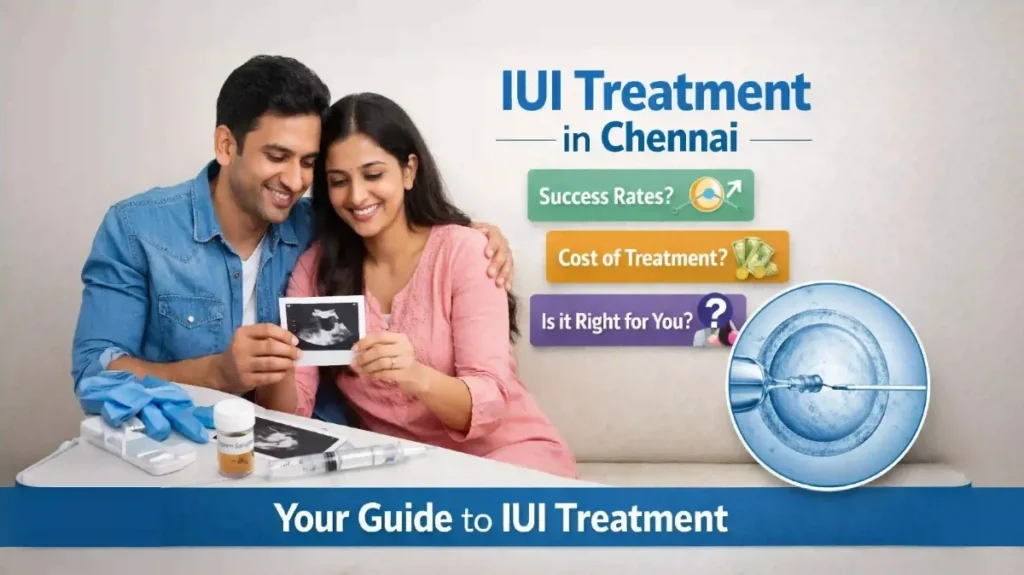
IUI Treatment in Chennai: Success Rates, Cost & Is It Right for You? Home IUI February 24, 2026 Introduction When the journey to parenthood becomes more difficult than expected, it can feel isolating and overwhelming. The good news is that fertility medicine today offers a range of options suited to different situations, and not every couple needs to start with the most complex treatments. For many couples, IUI treatment in Chennai offers a gentle, less invasive first step toward achieving pregnancy. Intrauterine insemination, or IUI, is one of the most commonly recommended fertility procedures for couples facing mild to moderate infertility challenges. It is simpler than IVF, more affordable, and when recommended for the right candidates, can be genuinely effective. At Promise Fertility Center in Tambaram, Chennai, we believe that every couple deserves clear, honest information to make decisions they feel confident about. This article explains what IUI involves, who it is suited for, what success rates look like realistically, and what it may cost. What Is IUI and How Does It Work? Intrauterine insemination is a fertility treatment in which specially prepared sperm is placed directly into the woman’s uterus during her fertile window. The goal is to reduce the distance sperm must travel to reach the egg, thereby increasing the chances of fertilization occurring naturally. The process begins with monitoring the woman’s menstrual cycle to identify the optimal time for insemination. In some cases, mild ovarian stimulation medication is used to encourage the development of one or two follicles, improving the timing and quality of ovulation. On the day of the procedure, a semen sample is collected from the male partner or a sperm donor and processed in the laboratory through a technique called sperm washing. This step concentrates the healthiest, most motile sperm and removes seminal fluid that could cause discomfort if introduced into the uterus. The insemination itself is a brief, minimally invasive procedure. A thin, flexible catheter is used to deposit the prepared sperm directly into the uterine cavity. Most women describe the procedure as similar to a routine cervical smear, with mild cramping at most. It takes only a few minutes and does not require anesthesia or hospitalization. A pregnancy test is typically done approximately two weeks after the procedure. Who Is IUI Suitable For? IUI is not a one-size-fits-all solution, and its suitability depends on a thorough medical assessment. It tends to work best for couples where the underlying fertility challenge is mild or specific. Commonly recommended candidates include couples dealing with unexplained infertility, men with mildly low sperm count or motility, women with cervical mucus problems that prevent sperm from reaching the egg, and couples where the male partner has difficulties with ejaculation or sexual dysfunction. IUI is also used in cases involving donor sperm, such as for single women or same-sex couples pursuing parenthood. However, IUI is generally not recommended when the fallopian tubes are blocked or severely damaged, when the woman has a significantly reduced ovarian reserve, or when there is severe male factor infertility. In these situations, IVF or ICSI is usually a more appropriate path and your specialist will advise accordingly. IUI Success Rates: What to Expect Realistically One of the most common questions couples ask is how likely IUI is to result in pregnancy. It is important to approach this question with honesty. IUI success rates vary considerably depending on several factors including the woman’s age, the underlying cause of infertility, whether ovarian stimulation was used, and the quality of sperm. Generally, per-cycle success rates for IUI range from around 10 to 20 percent for women under 35 with no major fertility complications. Success rates tend to decline with age and may be lower for women over 38 or those with reduced ovarian reserve. Most fertility specialists recommend attempting IUI for three to six cycles before reassessing and considering whether a more advanced treatment such as IVF might be more appropriate. It is worth understanding that even in natural conception, the monthly probability of pregnancy for a healthy couple under 35 is approximately 20 to 25 percent per cycle. IUI is not a dramatic departure from natural conception in terms of mechanism. It simply optimizes the timing and placement of sperm. Some couples succeed in the first or second cycle, while others may need more attempts. Patience and realistic expectations are part of the process. IUI Cost in Chennai: A Transparent Overview IUI cost in Chennai is generally more affordable than IVF, making it a practical first line of treatment for eligible couples. The overall cost of a single IUI cycle typically includes consultation fees, cycle monitoring through blood tests and ultrasound scans, sperm preparation in the laboratory, the insemination procedure itself, and any medications used for ovarian stimulation. Costs can vary between clinics depending on the technology used, the experience of the medical team, and the specific medications prescribed. At Promise Fertility Center, we are committed to transparent pricing so that couples can plan their treatment without financial surprises. Our team will walk you through a detailed cost breakdown during your consultation so that you have a clear understanding of what each cycle involves financially. IUI vs IVF: Which Is Better for You? This is a question many couples in Chennai ask when they first begin exploring fertility treatment. The answer depends entirely on your individual diagnosis and medical history. IUI is simpler, less invasive, and less costly, but it is only effective for certain categories of infertility. IVF, which involves fertilizing eggs outside the body in a laboratory before transferring embryos to the uterus, has higher success rates per cycle but is also more medically intensive and more expensive. Your fertility specialist will guide you based on your test results and clinical history. In many cases, IUI is a reasonable starting point. If IUI cycles are unsuccessful after an appropriate number of attempts, transitioning to IVF is a well-established and logical next step. Neither treatment is universally better. The right treatment is the one

IUI, IVF

IUI vs IVF in Chennai: Which Fertility Treatment Is Right for You?

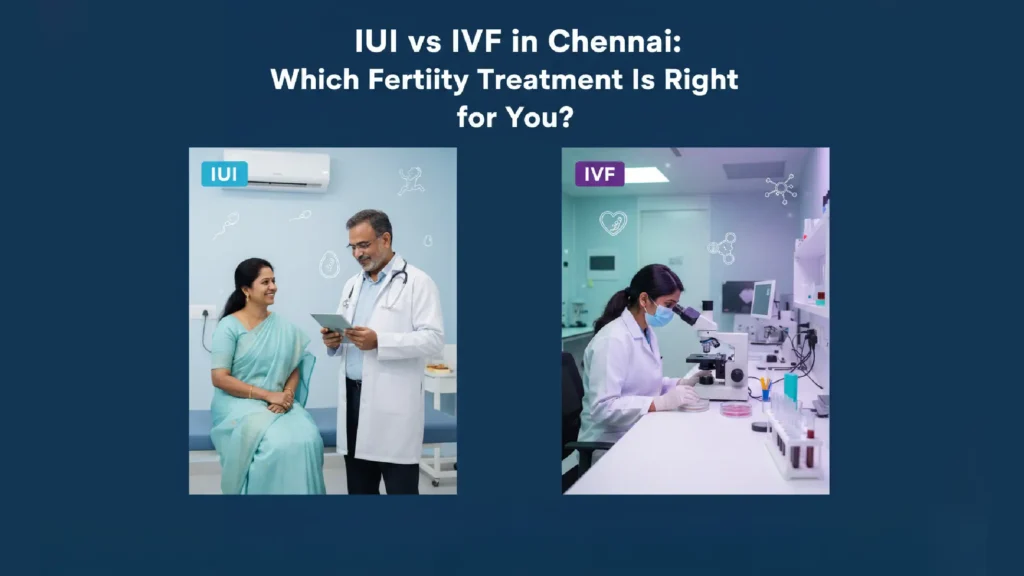
IUI vs IVF in Chennai: Which Fertility Treatment Is Right for You? Home IUI, IVF January 7, 2026 Introduction Choosing between fertility treatments can feel overwhelming, especially when you’re already navigating the emotional journey of infertility. If you’re exploring options for IUI vs IVF in Chennai, you’re not alone—thousands of couples face this decision each year. Understanding the differences between Intrauterine Insemination (IUI) and In Vitro Fertilization (IVF) is crucial for making an informed choice that aligns with your specific fertility needs, medical condition, and personal circumstances. At Promise Fertility Center in Tambaram, we help couples understand both treatments to determine the most effective path forward. Understanding IUI: The Basics Intrauterine Insemination (IUI) is a less invasive fertility treatment where specially prepared sperm is directly placed into the uterus during ovulation. This procedure increases the number of sperm reaching the fallopian tubes, enhancing the chances of fertilization. IUI is typically recommended for: Unexplained infertility Mild male factor infertility Cervical mucus issues Mild endometriosis Ovulation disorders The IUI process involves ovulation monitoring, sperm preparation, and a simple insemination procedure that takes just a few minutes. Success rates for IUI generally range from 10-20% per cycle, depending on age and underlying fertility factors. Understanding IVF: Advanced Fertility Treatment In Vitro Fertilization (IVF) is a more comprehensive fertility treatment where eggs are retrieved from the ovaries and fertilized with sperm in a laboratory. The resulting embryos are then cultured for several days before one or more are transferred to the uterus. IVF may be recommended for: Blocked or damaged fallopian tubes Severe male factor infertility Advanced maternal age Repeated IVF failure treatment needs in Tambaram Endometriosis Unexplained infertility after failed IUI attempts Genetic concerns requiring PGT testing Tambaram IVF success rates in Chennai vary based on age and individual circumstances, but generally offer higher success rates per cycle compared to IUI, ranging from 30-50% for women under 35. Key Differences Between IUI and IVF Complexity and Invasiveness: IUI is minimally invasive with less medication, while IVF requires ovarian stimulation, egg retrieval under sedation, and embryo transfer. Cost Considerations: IUI is significantly more affordable, typically costing a fraction of IVF. Many couples start with IUI before progressing to IVF if needed. Time Commitment: IUI cycles are shorter with fewer clinic visits, whereas IVF requires intensive monitoring and multiple appointments over several weeks. Success Rates: IVF generally offers higher success rates per cycle but requires greater physical, emotional, and financial investment. Medical Suitability: Your fertility diagnosis determines which treatment is appropriate. Severe tubal damage or implantation failure Chennai cases may require IVF from the start. Which Treatment Is Right for You? Several factors influence the choice between IUI and IVF: Age: Women under 35 with no identified tubal issues may benefit from trying IUI first. Those over 37 might consider moving to IVF sooner due to time considerations. Diagnosis: The underlying cause of infertility significantly impacts treatment selection. Secondary infertility treatment options may differ from primary infertility approaches. Previous Treatment History: If you’ve undergone multiple IUI cycles without success, transitioning to IVF may be recommended. Cases involving repeated IVF failure treatment in Tambaram may require additional testing like ERA test Chennai to optimize timing. Medical Factors: Conditions affecting egg quality, sperm parameters, or uterine receptivity influence treatment choice. Advanced diagnostics including PGT testing Tambaram can guide decisions. Personal Circumstances: Financial considerations, work schedules, emotional readiness, and support systems all play important roles in treatment planning. Promise Fertility Center’s Approach in Tambaram At Promise Fertility Center, we recognize that every fertility journey is unique. Our experienced team conducts comprehensive evaluations to recommend the most appropriate treatment pathway for your specific situation. Our Services Include: Detailed fertility assessments and diagnostic testing Personalized treatment plans for both IUI and IVF Advanced laboratory facilities with state-of-the-art technology ERA testing for implantation optimization PGT testing for genetic screening Specialized protocols for repeated IVF failure cases Emotional support and counseling throughout treatment Located conveniently in Tambaram with easy access from GST Road, Chromepet, and Pallavaram, our center combines medical excellence with compassionate care. We understand the emotional weight of fertility treatments and provide supportive guidance at every step. When to Seek Fertility Consultation Consider consulting a fertility specialist if you’ve been trying to conceive for 12 months (or 6 months if you’re over 35), have irregular menstrual cycles, known reproductive health issues, or previous pregnancy complications. Early consultation allows for timely diagnosis and appropriate treatment planning. Taking the Next Step Deciding between IUI vs IVF in Chennai doesn’t have to be confusing. With proper medical evaluation and expert guidance, you can determine the most effective treatment for your unique situation. Whether you’re beginning your fertility journey or exploring options after previous attempts, personalized care makes all the difference. Promise Fertility Center in Tambaram offers comprehensive fertility services tailored to South Chennai residents seeking compassionate, evidence-based care. Our team is committed to supporting you with transparent information, realistic expectations, and genuine hope. Ready to explore your fertility treatment options? Schedule a confidential consultation with our specialists to discuss whether IUI or IVF is right for you. Contact Promise Fertility Center today and take the first step toward building your family. Medical Disclaimer: This article provides general information about fertility treatments and should not replace personalized medical advice. Success rates vary based on individual circumstances. Consult with a qualified fertility specialist for diagnosis and treatment recommendations specific to your situation.

Scroll to Top