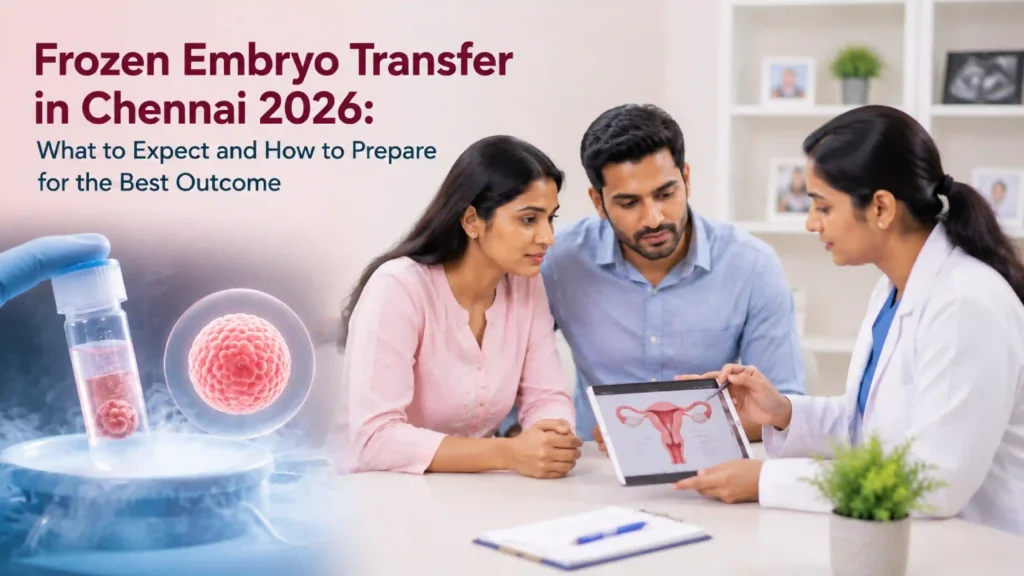
Frozen Embryo Transfer in Chennai 2026: What to Expect and How to Prepare for the Best Outcome
Frozen Embryo Transfer in Chennai 2026: What to Expect and How to Prepare for the Best Outcome Home Embryology July 25, 2026 Introduction If you’re preparing for a frozen embryo transfer in Chennai, you may be feeling a mix of hope and nervous anticipation, especially if this cycle follows a previous transfer or a long stretch of waiting. Understanding what frozen embryo transfer, often called FET, actually involves can help you feel more prepared and less overwhelmed as you move into this stage of your journey. This article walks through what happens during a frozen embryo transfer, how to prepare for it, and what realistic expectations look like. At Promise Fertility Center, we believe clear information and genuine support go hand in hand, helping you approach this step with confidence rather than uncertainty. What Is Frozen Embryo Transfer? Frozen embryo transfer refers to placing a previously frozen (vitrified) embryo into the uterus during a separate cycle from when the eggs were originally retrieved and fertilized. This differs from a fresh embryo transfer, where the embryo is transferred shortly after retrieval and fertilization within the same cycle. Embryos may be frozen for several reasons, including: – Preserving extra embryos from an IVF cycle for future use – Allowing the uterine lining to recover from stimulation medications before transfer – Enabling genetic testing of embryos before selecting one for transfer – Supporting a more controlled, better-timed transfer cycle FET has become increasingly common in modern IVF practice, partly because it allows the uterine environment to be optimized separately from the ovarian stimulation process. Is Frozen Embryo Transfer Better Than Fresh Transfer? This is a common question among patients researching FET protocols in Tambaram, and the honest answer depends on individual circumstances rather than a universal rule. Some research suggests that in certain situations, allowing the body to recover from stimulation medications before transfer may support a more receptive uterine environment. In other cases, fresh transfer may be equally appropriate. Your fertility specialist will consider factors such as your hormonal response during stimulation, uterine lining development, and whether genetic testing is part of your treatment plan when recommending fresh or frozen transfer for your specific case. How Does the FET Process Work? A frozen embryo transfer cycle generally involves several stages, each designed to prepare your body for the embryo transfer: – Preliminary evaluation, including hormonal assessment and uterine lining review – Endometrial preparation, using medication to help develop a receptive uterine lining, or in some cases, monitoring a natural cycle – Monitoring appointments, to track lining thickness and hormonal readiness through ultrasound and blood tests – Embryo thawing, performed by the embryology lab shortly before the scheduled transfer – Embryo transfer, a relatively quick outpatient procedure – Post-transfer waiting period, followed by pregnancy testing Your fertility team will guide you through each stage, adjusting timing according to your body’s response. Preparing for Frozen Embryo Transfer While no preparation can guarantee a specific outcome, several steps may help support your overall readiness for the FET cycle: – Following your prescribed medication schedule closely and consistently – Attending all scheduled monitoring appointments for lining and hormonal assessment – Maintaining balanced nutrition and adequate hydration – Prioritizing rest and stress management during the preparation period – Avoiding smoking and limiting alcohol, as advised by your specialist – Discussing any lifestyle questions directly with your fertility team rather than relying on general advice Your specialist may provide additional, personalized guidance depending upon your specific hormonal and uterine lining response. Understanding Success Factors for FET It’s natural to want reassurance about outcomes, but responsible fertility care means avoiding guarantees. Success with frozen embryo transfer depends on multiple factors, including embryo quality, uterine receptivity, endometrial thickness and pattern, and overall reproductive health. Genetic testing of embryos, when part of the treatment plan, may provide additional information about embryo viability, though it does not guarantee implantation or pregnancy. A fertility specialist who provides an honest assessment will always emphasize that outcomes are individualized rather than based on general trends alone. The Emotional Journey Around FET Waiting through an FET cycle, particularly if it follows a previous unsuccessful transfer, can bring a complex mix of hope, anxiety, and emotional fatigue. These feelings are valid and common, and there’s no “right” way to feel during this process. Leaning on your partner, a counselor, or a support network during this waiting period can help you navigate the emotional demands of treatment. Many patients find that acknowledging these feelings, rather than suppressing them, makes the waiting period feel more manageable. Promise Fertility Center’s Approach At Promise Fertility Center in Tambaram, our embryology laboratory follows careful protocols for embryo freezing, storage, and thawing, supporting the overall integrity of the FET process. Our fertility specialists personalize endometrial preparation protocols based on each patient’s hormonal response and uterine lining development, rather than applying a one-size-fits-all approach. We prioritize close monitoring throughout the preparation cycle, adjusting medication and timing as needed. Our team also ensures clear communication at every stage, explaining monitoring results and next steps in accessible language. Recognizing that this stage of treatment carries emotional weight, we integrate counseling support into our care approach, helping patients navigate the waiting periods and uncertainty that often accompany FET cycles. Conveniently located in Tambaram, our center is accessible to patients from GST Road, Chromepet, Pallavaram, and other parts of South Chennai, supporting continuity of care throughout your treatment journey. Practical Information for Your Consultation If you’re preparing for a frozen embryo transfer or want to understand your specific protocol, an open conversation with your fertility specialist can help clarify next steps. For your appointment, it’s helpful to bring: – Any previous IVF or FET cycle records, including embryo freezing details – A summary of your menstrual and hormonal history – A list of current medications and relevant medical history – Questions about your specific endometrial preparation protocol Our team can also help address insurance-related questions and guide you through documentation and cost-related considerations specific to your case.