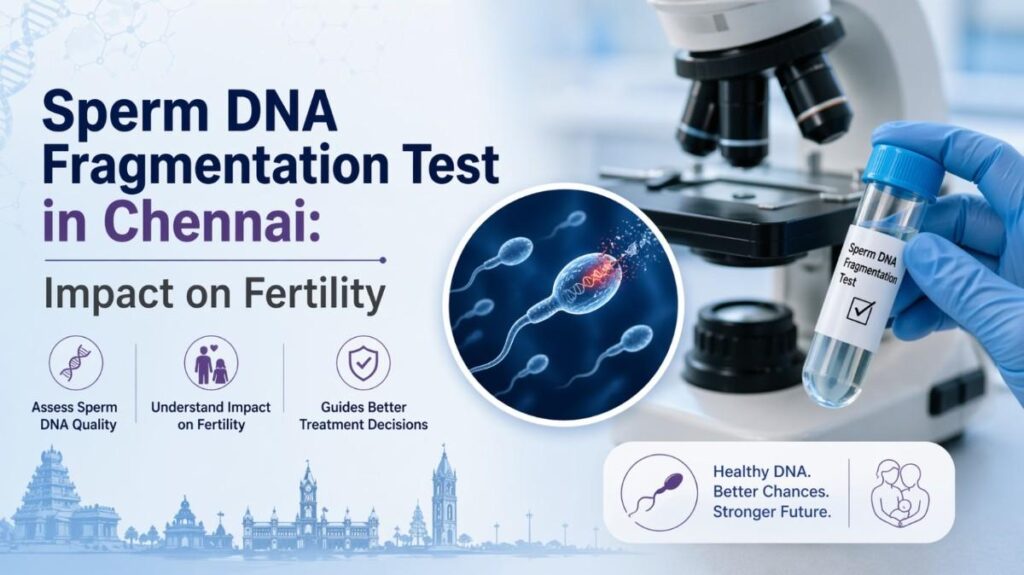
Sperm DNA Fragmentation Test in Chennai: Impact on Fertility
Sperm DNA Fragmentation Test in Chennai: Impact on Fertility Home ICSI April 20, 2026 Introduction When couples face difficulty conceiving, the focus often turns to basic fertility tests—but sometimes, standard results appear normal while pregnancy still doesn’t happen. In such cases, deeper evaluation may be needed. One important but often overlooked factor is sperm DNA fragmentation Chennai, a test that provides insight beyond routine semen analysis. Sperm DNA fragmentation refers to damage in the genetic material carried by sperm. Even when sperm count and motility seem normal, DNA damage can affect fertilization, embryo development, and pregnancy outcomes. If you’ve experienced unexplained infertility, repeated IVF failure, or miscarriages, understanding this test can offer clarity. In this article, we’ll explain what sperm DNA fragmentation is, why it matters, how the test works, and what treatment options are available in Chennai—helping you make informed decisions on your fertility journey. What Is Sperm DNA Fragmentation? Sperm DNA fragmentation refers to breaks or damage in the DNA within the sperm cell. This genetic material is essential for: Fertilization Healthy embryo development Successful pregnancy A standard semen analysis evaluates: Sperm count Motility (movement) Morphology (shape) However, it does not assess DNA integrity. This is where advanced sperm testing Chennai becomes crucial. Why Is Sperm DNA Important for Fertility? Even if fertilization occurs, damaged sperm DNA can lead to: Poor embryo quality Failed implantation Increased risk of miscarriage In some cases, couples may go through multiple treatment cycles without success, not realizing that sperm DNA quality is a contributing factor. What Causes Sperm DNA Fragmentation? If you’re wondering what is sperm DNA fragmentation test Chennai and what leads to DNA damage, here are common causes: 1. Oxidative Stress An imbalance between free radicals and antioxidants can damage sperm DNA. 2. Lifestyle Factors Smoking Alcohol consumption Poor diet Lack of sleep Chronic stress These are increasingly common in urban environments like Chennai. 3. Varicocele Enlarged veins in the scrotum can increase temperature and affect sperm quality. 4. Infections Reproductive tract infections may contribute to DNA damage. 5. Age As men age, the risk of DNA fragmentation increases. 6. Environmental Exposure Pollution and toxins can impact sperm health over time. What Is a Sperm DNA Fragmentation Test? The DFI test Chennai (DNA Fragmentation Index test) measures the percentage of sperm with damaged DNA. Common Testing Methods: SCSA (Sperm Chromatin Structure Assay) TUNEL assay Comet assay What Do Results Mean? Low DFI (below 15%): Good sperm DNA integrity Moderate DFI (15–30%): Reduced fertility potential High DFI (above 30%): Higher risk of fertility challenges Your fertility specialist will interpret results in the context of your overall health and fertility history. When Is This Test Recommended? A sperm quality test Chennai like DNA fragmentation analysis is often advised when: Couples face unexplained infertility Repeated IVF or IUI failures occur There is a history of recurrent miscarriage Semen analysis appears normal but pregnancy is not achieved This test helps uncover hidden male factor infertility. How Is the Test Performed? The procedure is simple and non-invasive: A semen sample is collected The sample is analyzed in a specialized lab Results are typically available within a few days There is no pain or complex preparation involved, though your doctor may recommend abstinence for 2–5 days before testing. Treatment Options for Sperm DNA Damage If results show high DNA fragmentation, several sperm DNA damage treatment Chennai options are available: 1. Lifestyle Modifications Small changes can make a big difference: Quit smoking and alcohol Improve diet (antioxidant-rich foods) Maintain healthy weight Reduce stress 2. Antioxidant Therapy Doctors may prescribe supplements such as: Vitamin C and E Zinc Coenzyme Q10 These help reduce oxidative stress and improve sperm health. 3. Treat Underlying Conditions Varicocele surgery (if present) Antibiotics for infections Addressing root causes can improve outcomes. 4. Advanced Fertility Treatments If natural improvement is limited, assisted reproductive techniques may help: ICSI (Intracytoplasmic Sperm Injection) A single healthy sperm is injected directly into the egg Helps bypass DNA-related fertilization issues IVF with Advanced Sperm Selection Special techniques may be used to select sperm with better DNA quality. How Does This Impact IVF Success? High DNA fragmentation can: Reduce fertilization rates Affect embryo development Lower implantation success However, with proper diagnosis and targeted treatment, outcomes can improve significantly. It’s important to remember that fertility treatment is individualized—results vary, and your doctor will guide you toward the most suitable approach. Emotional Considerations Male fertility issues, including DNA fragmentation, can be difficult to process. Many individuals feel: Guilt or self-blame Anxiety about treatment outcomes Hesitation to discuss the issue Open communication with your partner and healthcare provider is essential. Fertility challenges are shared experiences, and support plays a key role in navigating them. Promise Fertility Center’s Approach At Promise Fertility Center in Tambaram, Chennai, male fertility evaluation is given equal importance as female fertility. Advanced Diagnostic Testing The center offers comprehensive advanced sperm testing Chennai, including DNA fragmentation analysis, to identify hidden issues. Personalized Treatment Plans Based on test results, treatment is tailored to: Improve natural fertility Enhance success in assisted reproduction Expertise in Male Fertility Experienced fertility specialists evaluate both partners thoroughly, ensuring no factor is overlooked. Modern Lab Facilities State-of-the-art laboratory support ensures accurate diagnosis and high-quality embryo handling. Holistic Care In addition to medical treatment, guidance is provided on: Lifestyle improvements Nutritional support Emotional well-being Accessible Location Conveniently located in Tambaram, the center serves patients from: Chromepet Pallavaram GST Road South Chennai This makes regular visits easier during treatment cycles. Practical Information When Should You Consider This Test? After repeated failed fertility treatments If advised by your fertility specialist When seeking deeper evaluation of male fertility What to Bring: Previous semen analysis reports Medical history Treatment records (if any) Cost Consideration: Advanced sperm tests may cost more than basic analysis but provide valuable insights that can guide effective treatment. Conclusion & Next Steps Understanding sperm DNA health can be a turning point in your fertility journey. While standard tests provide important information, deeper insights from sperm DNA fragmentation