
Preimplantation Genetic Testing (PGT) in Chennai 2026: Should You Screen Your Embryos Before Transfer?
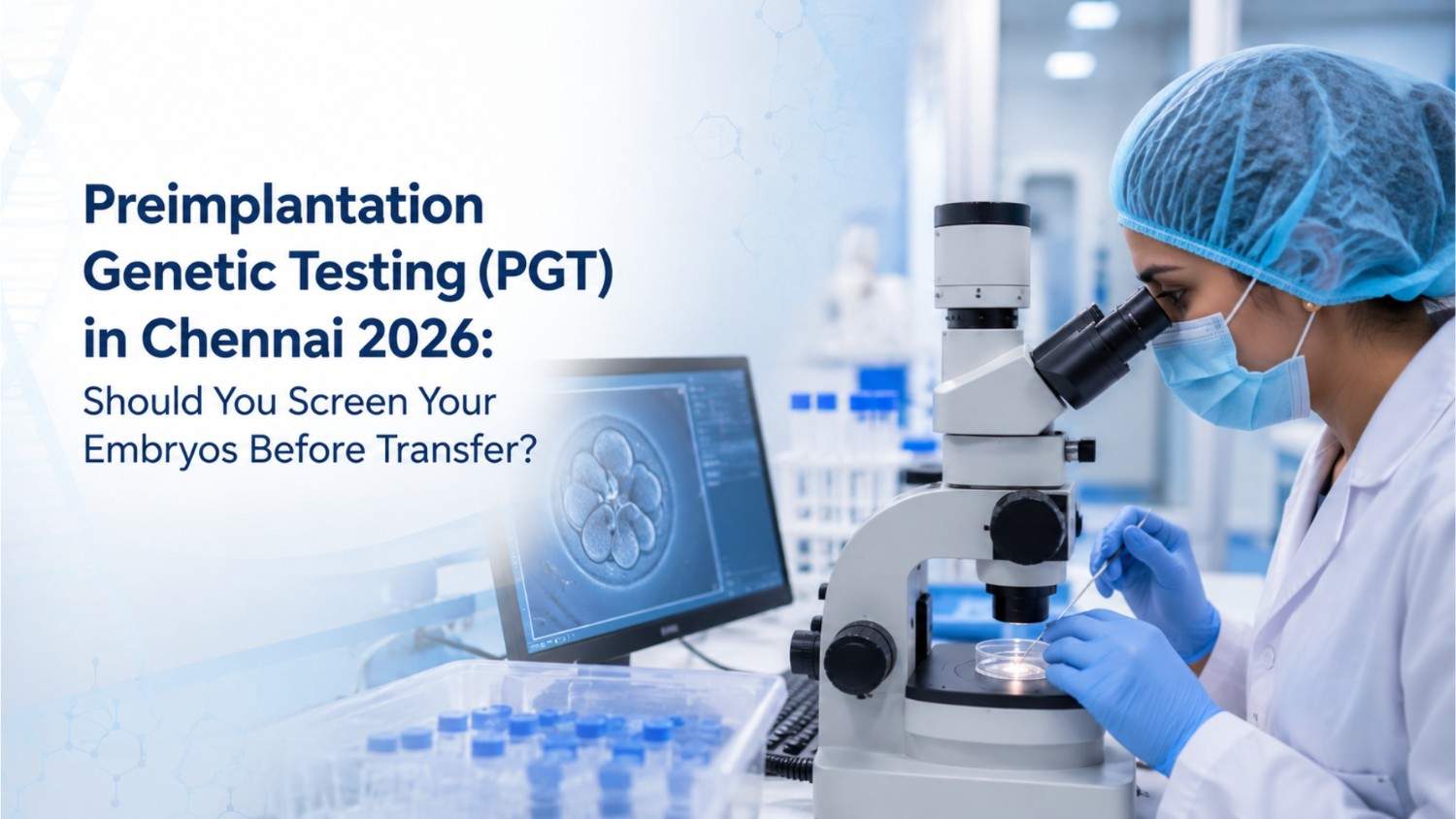
- Preimplantation Genetic Testing
- June 7, 2026
Making One of the Most Important Decisions of Your IVF Journey
When you are going through IVF, every decision feels significant — and the question of whether to screen your embryos before transfer is one of the most important conversations you may have with your fertility specialist. For couples exploring PGT embryo testing in Chennai 2026, this technology offers a powerful way to understand more about your embryos before a transfer takes place.
Preimplantation Genetic Testing, commonly known as PGT, is an advanced procedure performed on embryos created through IVF before they are transferred to the uterus. It allows specialists to examine embryos for chromosomal abnormalities or specific genetic conditions — helping to identify the embryos most likely to result in a healthy pregnancy.
At Promise Fertility Center in Tambaram, South Chennai, we believe that well-informed patients make better decisions. This article will help you understand what PGT is, who it is recommended for, and whether it may be the right step for you in 2026.
PGT is a laboratory technique used during an IVF cycle to test embryos for genetic or chromosomal issues before they are transferred to the uterus. A small number of cells are carefully biopsied from the embryo — typically on Day 5 or Day 6 when the embryo has reached the blastocyst stage — and sent to a specialist genetics laboratory for analysis.
The embryos are then frozen while results are awaited. Only those identified as chromosomally normal or unaffected by a specific genetic condition are considered for transfer.
The Three Main Types of PGT:
- PGT-A (Preimplantation Genetic Testing for Aneuploidies): Screens embryos for abnormal chromosome numbers, such as Down syndrome (trisomy 21), Turner syndrome, or other chromosomal imbalances. This is the most commonly performed type of PGT during IVF.
- PGT-M (Preimplantation Genetic Testing for Monogenic Disorders): Tests for specific single-gene conditions such as thalassaemia, sickle cell disease, cystic fibrosis, or spinal muscular atrophy. This is recommended when one or both partners carry a known hereditary genetic condition.
- PGT-SR (Preimplantation Genetic Testing for Structural Rearrangements): Used when one partner carries a chromosomal structural rearrangement such as a translocation, which can lead to recurrent miscarriage or failed IVF cycles.
Who Should Consider PGT Before Embryo Transfer in Chennai?
PGT is not necessary for every couple undergoing IVF. However, it is strongly considered in specific clinical situations. Your fertility specialist at Promise Fertility Center will assess your individual history and guide you on whether PGT is appropriate for your case.
PGT is commonly recommended for:
- Women aged 35 and above, as the risk of chromosomal abnormalities in embryos increases significantly with age
- Couples who have experienced two or more consecutive miscarriages (recurrent pregnancy loss)
- Couples who have had two or more failed IVF cycles despite good-quality embryos
- Individuals or couples who are known carriers of a hereditary genetic condition
- Men with severely abnormal sperm parameters, where embryo chromosomal integrity may be a concern
- Couples who have previously had a pregnancy or child affected by a chromosomal or genetic disorder
It is important to understand that PGT does not test for all possible genetic conditions. A normal PGT result reduces — but does not entirely eliminate — the risk of genetic abnormalities. Your specialist will explain the scope and limitations of testing specific to your situation.
Is PGT Worth It Before Embryo Transfer in Chennai?
This is the question many couples ask, and it is a fair one. PGT adds an additional step to the IVF process and requires careful consideration.
Potential benefits of PGT include:
- Identifying chromosomally normal embryos, which may improve the chance of a successful implantation
- Reducing the risk of miscarriage associated with chromosomal abnormalities
- Lowering the possibility of transferring an embryo affected by a serious genetic condition
- Allowing single embryo transfer with greater confidence, reducing the risk of multiple pregnancies
- Providing greater emotional reassurance during the transfer process for couples with a relevant history
Factors to consider before choosing PGT:
- Not all embryos survive the biopsy process, although complication rates are low with experienced embryologists
- PGT-A may occasionally reclassify an embryo as abnormal that could have developed into a healthy pregnancy — this is known as the mosaic embryo challenge and is an evolving area of reproductive science
- PGT-M requires advance preparation, including specialised testing of both partners, and can take several weeks to set up
- The decision should always be made in consultation with a qualified fertility specialist and, where appropriate, a genetic counsellor
The choice to undergo PGT is deeply personal. There is no universally right or wrong answer — only the answer that is right for your specific medical situation, family history, and emotional readiness.
The PGT Process: What to Expect Step by Step
Understanding the process can help reduce anxiety and allow you to plan more confidently.
- IVF stimulation and egg retrieval — You undergo a standard IVF cycle to produce and retrieve mature eggs
- Fertilisation — Eggs are fertilised in the laboratory using conventional IVF or ICSI (Intracytoplasmic Sperm Injection)
- Embryo culture — Fertilised embryos are cultured in the laboratory for 5–6 days until they reach the blastocyst stage
- Embryo biopsy — A small number of cells are carefully removed from each suitable blastocyst
- Genetic analysis — Biopsied cells are sent to a genetics laboratory for chromosomal or genetic analysis (results typically take 1–2 weeks)
- Embryo freezing — All biopsied embryos are frozen while awaiting results
- Frozen Embryo Transfer (FET) — Once results are available, chromosomally normal embryos are selected for transfer in a subsequent cycle
How Promise Fertility Center in Tambaram Approaches PGT
At Promise Fertility Center, located in Tambaram and easily accessible from Chromepet, Pallavaram, Vandalur, and across the GST Road corridor, we offer comprehensive preimplantation genetic testing as part of our advanced IVF programme.
Our approach to PGT is guided by three principles:
Evidence-based selection. We recommend PGT only when there is a clear clinical indication. We do not advocate for PGT as a routine step for every couple — our recommendations are always grounded in your individual medical history, age, diagnosis, and reproductive goals.
Advanced laboratory standards. Our embryology team is trained in precision blastocyst biopsy techniques, and we work with accredited genetics laboratories to ensure the accuracy and reliability of test results. Every embryo is handled with the utmost care at every stage of the process.
Integrated genetic counselling. For couples undergoing PGT-M or PGT-SR, we coordinate with genetic counselling services to ensure you fully understand the implications of your results — and are supported in whatever decision you make. We recognise that receiving genetic information about your embryos can be emotionally complex, and our team is here to guide you with empathy and clarity.
Our PGT-related services include:
- PGT-A for chromosomal screening
- PGT-M for single-gene disorders including thalassaemia and sickle cell disease
- PGT-SR for chromosomal structural rearrangements
- Frozen Embryo Transfer (FET) following PGT
- Genetic counselling coordination
- Emotional and psychological support throughout the process
When Should You Seek a Consultation About PGT?
We recommend speaking with a fertility specialist at Promise Fertility Center if any of the following apply to you:
- You are planning an IVF cycle and are aged 35 or above
- You or your partner carry a known genetic condition
- You have experienced recurrent miscarriages or failed IVF cycles
- You want to understand all available options before beginning your IVF journey
- You have had a previous pregnancy affected by a chromosomal condition
For your first consultation, bring any previous fertility investigation reports, genetic test results if available, and a summary of your reproductive history. Our team will take the time to review your case thoroughly and explain your options in plain, honest language.
Frequently Asked Questions
Is PGT worth it before embryo transfer in Chennai?
For couples with a relevant clinical history — such as recurrent miscarriage, advanced maternal age, or a known genetic condition — PGT can provide valuable information and may improve IVF outcomes. Whether it is appropriate for you depends on your individual circumstances, which your specialist will discuss in detail.
Which IVF clinic offers PGT near Tambaram in 2026?
Promise Fertility Center in Tambaram offers PGT-A, PGT-M, and PGT-SR as part of its advanced IVF programme, serving patients across South Chennai including Chromepet, Pallavaram, and the GST Road corridor.
Does PGT guarantee a successful pregnancy?
No. PGT can improve the selection of embryos for transfer, but it does not guarantee pregnancy or a live birth. Many factors influence IVF outcomes, and your specialist will provide realistic expectations based on your specific case.
Take the Next Step with Confidence
Deciding whether to screen your embryos before transfer is a significant step — and one that deserves careful, personalised guidance. At Promise Fertility Center in Tambaram, Chennai, we are here to help you navigate this decision with clarity, compassion, and the most current evidence-based information available.
You do not have to make this decision alone. Our specialists will walk you through every aspect of PGT — what it can tell you, what its limitations are, and whether it makes sense for your unique journey.
📍 Promise Fertility Center | Tambaram, Chennai, Tamil Nadu 📞 Book Your Confidential Consultation Today — We are here to listen, guide, and support you every step of the way.
Medical Disclaimer: This article is for informational purposes only and does not constitute medical advice. Genetic testing outcomes and IVF success rates vary significantly between individuals. Please consult a qualified fertility specialist and genetic counsellor for a personalised assessment. Promise Fertility Center does not guarantee pregnancy or specific treatment outcomes.