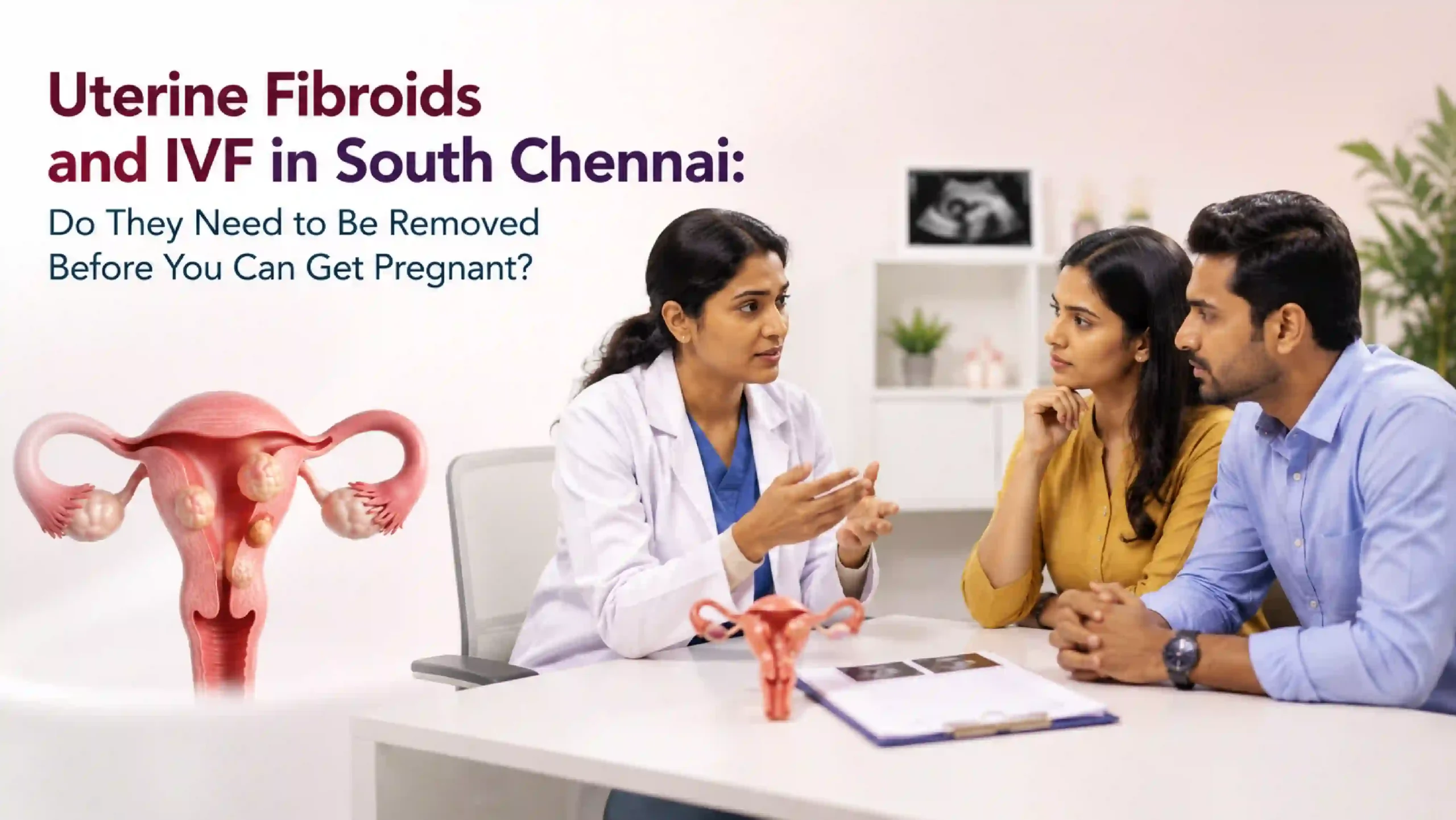
Uterine Fibroids and IVF in South Chennai: Do They Need to Be Removed Before You Can Get Pregnant?
- IVF
- July 16, 2026
Introduction
Learning you have uterine fibroids while trying to conceive can bring up a flood of questions and worry, especially when you’re already navigating the emotional weight of fertility treatment. If you’re researching uterine fibroids and IVF in South Chennai, you may be wondering whether these growths mean surgery is unavoidable, or whether they’re even the reason behind your fertility struggles at all.
This article walks through what fibroids are, how they can affect fertility and IVF, and how a fertility specialist decides whether removal is truly necessary before treatment. At Promise Fertility Center, our goal is to replace fear with clarity, so you can move forward with confidence rather than uncertainty.
What Are Uterine Fibroids?
Uterine fibroids are non-cancerous growths that develop in or around the uterus. They vary widely in size, number, and location, and many women have fibroids without ever experiencing symptoms or fertility challenges. For others, depending on where a fibroid sits, it may interfere with conception or pregnancy.
Fibroids are generally categorized based on their location:
– Submucosal fibroids, which grow into the uterine cavity and are more likely to affect fertility
– Intramural fibroids, which develop within the muscular wall of the uterus
– Subserosal fibroids, which grow on the outer surface of the uterus and typically have less impact on fertility
Not all fibroids carry the same level of concern, which is why an individualized evaluation is so important rather than assuming every fibroid requires the same approach.
Do Fibroids Always Affect Fertility or IVF Success?
Not necessarily. Many women with fibroids, particularly smaller subserosal or intramural fibroids that don’t distort the uterine cavity, conceive naturally or through IVF without complications related to the fibroid itself.
Fibroids are more likely to interfere with fertility or implantation when they:
– Distort the shape of the uterine cavity
– Are located close to where an embryo would implant
– Are large enough to affect blood flow to the uterine lining
– Block or partially obstruct the fallopian tube openings
This is why your fertility specialist will typically recommend imaging, such as an ultrasound or hysteroscopy, to understand your fibroid’s exact size, location, and potential impact before recommending any treatment path.
Should Fibroids Be Removed Before IVF?
This is one of the most common questions patients ask, and the honest answer is: it depends entirely on your specific fibroid characteristics. Removal, known as a myomectomy, is not automatically necessary for every patient with fibroids.
Fibroid removal before IVF may be recommended when:
– The fibroid distorts the uterine cavity, potentially affecting implantation
– The fibroid is submucosal and located within the uterine cavity itself
– There is a history of unexplained implantation failure that may be linked to fibroid location
– The fibroid is significantly affecting uterine blood flow or lining quality
On the other hand, if a fibroid is small, doesn’t distort the cavity, and isn’t likely to interfere with implantation, your specialist may recommend proceeding with IVF without surgical intervention, monitoring the fibroid instead. This decision should always be based on your specific imaging results and clinical evaluation, not a blanket rule.
Understanding Myomectomy: What It Involves
A myomectomy is a surgical procedure to remove fibroids while preserving the uterus, making it a common choice for women who wish to maintain their fertility. Depending on the fibroid’s size and location, this may be performed through:
– Hysteroscopic myomectomy, for fibroids located within the uterine cavity, often a less invasive approach
– Laparoscopic myomectomy, for fibroids on or within the uterine wall, using small incisions
– Open (abdominal) myomectomy, reserved for larger or more complex fibroid cases
Recovery time and the appropriate waiting period before attempting IVF vary depending on the surgical approach and individual healing, which your specialist will discuss with you directly.
Realistic Expectations After Fibroid Removal
It’s natural to hope that removing a fibroid will resolve fertility challenges entirely, but it’s important to approach this with realistic expectations. Fibroid removal can improve the uterine environment when the fibroid was genuinely interfering with implantation, but it does not guarantee pregnancy, since fertility depends on multiple factors beyond fibroids alone.
Your fertility specialist will consider your complete fertility profile, including egg quality, sperm health, hormonal balance, and overall reproductive health, when determining your treatment plan after fibroid removal.
Emotional Considerations When Facing a Fibroid Diagnosis
Discovering fibroids during a fertility workup can bring a mix of relief (finally having an explanation) and anxiety (facing possible surgery before treatment can continue). Both reactions are valid, and it’s okay to need time to process this information.
Talking openly with your fertility specialist about your concerns, timeline, and any fears around surgery can help you feel more in control of the process. Counseling support is also available for patients who find this stage of their journey particularly overwhelming.
Promise Fertility Center's Approach
At Promise Fertility Center in Tambaram, we approach fibroid evaluation with precision and care, using detailed imaging to understand each fibroid’s size, location, and likely impact on fertility before recommending next steps. Our gynecologists and infertility specialists work together to determine whether monitoring, myomectomy, or proceeding directly with IVF is the most appropriate path for your specific case.
We never recommend surgery as a default step. Instead, our team carefully weighs your fibroid characteristics against your overall fertility profile, ensuring any intervention is genuinely necessary rather than a routine precaution. For patients who do require a myomectomy, we provide clear guidance on recovery expectations and appropriate timing before beginning or resuming IVF treatment.
Understanding that a fibroid diagnosis can be emotionally unsettling, we integrate counseling support into our care approach, helping patients process concerns and make informed decisions with confidence. Conveniently located in Tambaram, our center is accessible to patients from GST Road, Chromepet, Pallavaram, and other parts of South Chennai, supporting continuity of care throughout diagnosis, treatment, and recovery.
Practical Information for Your Consultation
If you’ve been diagnosed with fibroids or suspect they may be affecting your fertility, an evaluation with a fertility specialist can help clarify your next steps. For your appointment, it’s helpful to bring:
– Any previous ultrasound or imaging reports related to fibroids
– A summary of your menstrual and fertility history
– Details of any prior fibroid treatments or surgeries
– A list of current medications and relevant medical history
Our team can also help address insurance-related questions and guide you through documentation needs.
Conclusion: Clarity Over Assumptions
Not every fibroid needs to be removed before IVF, and not every fertility challenge is caused by fibroids alone. The right path forward depends on a careful, individualized evaluation of your specific fibroid characteristics and overall fertility profile.
At Promise Fertility Center, we’re committed to replacing uncertainty with clear, honest guidance, helping you understand exactly what your diagnosis means for your fertility journey. If you’d like a thorough evaluation of your fibroids and fertility options, we invite you to schedule a confidential consultation with our specialists in Tambaram. You deserve answers grounded in your specific case, not assumptions.
Frequently Asked Questions (FAQs)
1. Do fibroids affect IVF success in Chennai?
Fibroids may affect IVF success depending on their size, location, and whether they distort the uterine cavity. Many fibroids, particularly smaller or outer-wall fibroids, do not significantly impact outcomes.
2. Should I remove fibroids before IVF in Tambaram?
This depends on your specific fibroid characteristics. Removal is generally recommended when a fibroid distorts the uterine cavity or is likely to interfere with implantation, based on imaging and clinical evaluation.
3. What type of fibroids are most likely to affect fertility?
Submucosal fibroids, which grow into the uterine cavity, are more likely to affect fertility compared to intramural or subserosal fibroids.
4. How long should I wait for IVF after fibroid removal surgery?
Recovery time varies based on the type of myomectomy performed and individual healing. Your fertility specialist will provide guidance specific to your procedure and recovery progress.
5. Where can I find a fertility specialist for fibroids near Pallavaram and Chromepet?
Promise Fertility Center in Tambaram is accessible to patients from Pallavaram, Chromepet, GST Road, and other parts of South Chennai for fibroid evaluation and fertility treatment.
This article is intended for general informational purposes and does not replace personalized medical advice. Please consult a qualified fertility specialist to discuss your individual diagnosis and treatment options.