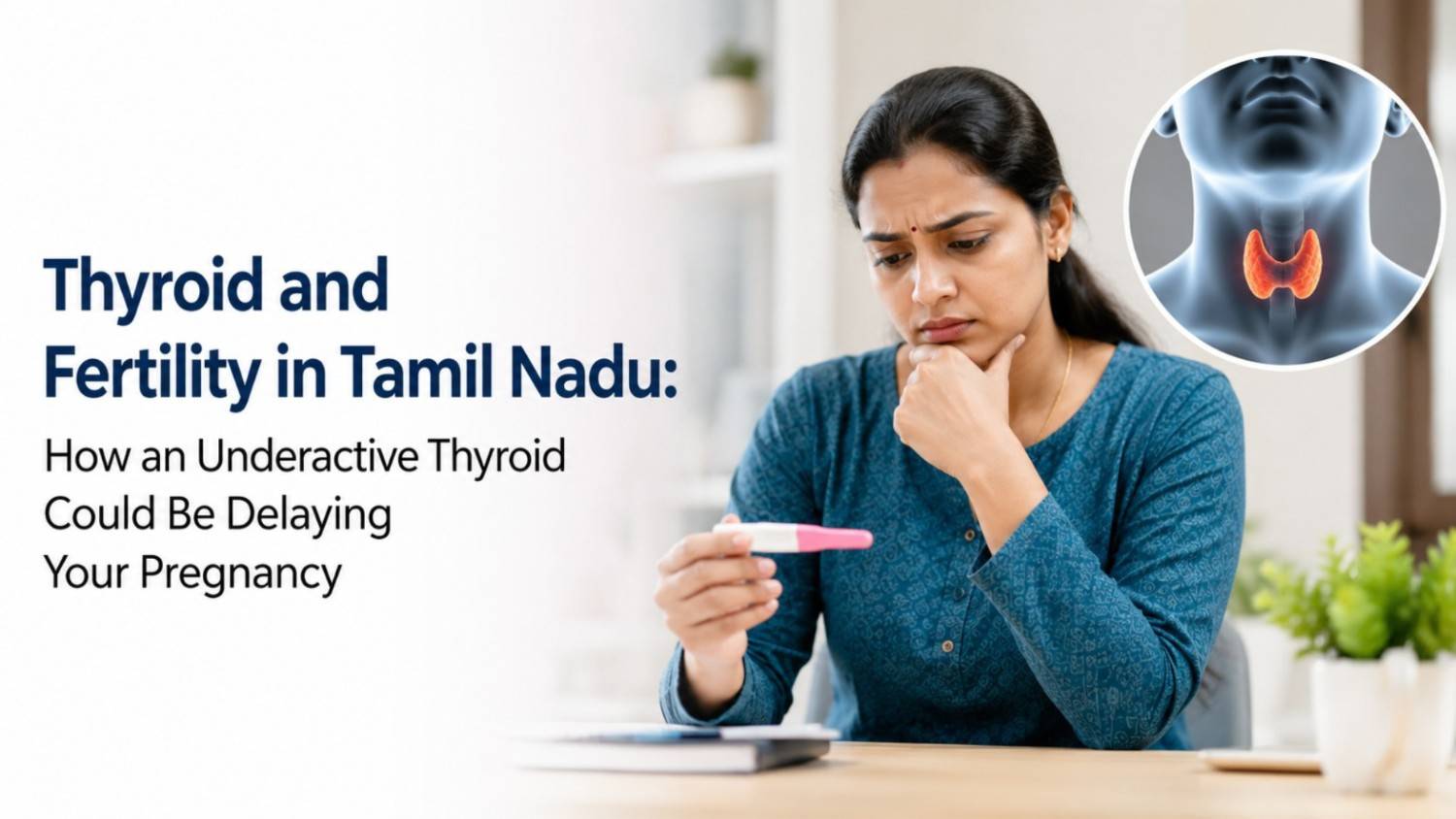
Thyroid and Fertility in Tamil Nadu: How an Underactive Thyroid Could Be Delaying Your Pregnancy
- Thyroid and Fertility
- June 25, 2026
Introduction
If you have been trying to conceive without success and feel that something is not quite right with your body, your thyroid could be playing a role you may not have considered. Thyroid and fertility in Chennai is an increasingly important topic as more women are being diagnosed with thyroid disorders that silently affect their reproductive health.
The thyroid gland — a small, butterfly-shaped gland in your neck — has a powerful influence over your hormonal balance, menstrual cycle, and overall ability to conceive. When it is not functioning as it should, the effects on fertility can be significant, yet many women remain undiagnosed for months or even years.
At Promise Fertility Centre in Tambaram, Chennai, our specialists understand the complex relationship between thyroid health and fertility. This article explains how an underactive thyroid can affect your chances of conception, what signs to watch for, and how the right medical support can help you move forward with clarity and confidence.
Hypothyroidism refers to a condition where the thyroid gland does not produce enough thyroid hormone. This hormone plays a critical role in regulating metabolism, energy levels, and importantly — reproductive function.
When thyroid hormone levels are low, the body’s hormonal communication system is disrupted. This can interfere with the signals that regulate ovulation, making it harder to conceive naturally or even with assisted reproductive treatments.
Hypothyroidism is particularly common among women in South India, including Tamil Nadu, where iodine deficiency and autoimmune thyroid conditions such as Hashimoto’s thyroiditis are frequently observed. Many women living in Chennai, Tambaram, and surrounding areas may have subclinical hypothyroidism — a mild form of the condition — without being aware of it.
How an Underactive Thyroid Affects Your Fertility
The connection between thyroid function and reproductive health is well established in reproductive medicine. Here is how hypothyroidism can interfere with your ability to conceive:
Disrupted Ovulation
Low thyroid hormone levels can elevate prolactin — a hormone that, when too high, suppresses ovulation. Without regular ovulation, conception becomes significantly more difficult.
Irregular Menstrual Cycles
Hypothyroidism often causes irregular, heavy, or absent periods. Irregular cycles make it harder to predict fertile windows and can be a sign that the hormonal environment needed for conception is not optimal.
Poor Egg Quality
Thyroid hormones play a role in follicular development — the process by which eggs mature within the ovaries. Insufficient thyroid function may compromise egg quality, which in turn affects fertilization and embryo development.
Increased Risk of Miscarriage
Research in reproductive medicine has shown that untreated or inadequately treated hypothyroidism is associated with a higher risk of early pregnancy loss. The uterine environment needs to be hormonally balanced to support implantation and early fetal development.
Impact on IVF Outcomes
For women undergoing IVF treatment in South Chennai, thyroid function is a critical factor. Studies have indicated that optimal thyroid levels before and during an IVF cycle can positively influence embryo implantation rates. This is why thyroid screening is an essential part of fertility evaluation at Promise Fertility Centre.
Recognizing the Signs of Thyroid-Related Fertility Issues
Many women with hypothyroidism experience symptoms that are easy to overlook or attribute to stress and lifestyle. Common signs include:
- Persistent fatigue or low energy
- Unexplained weight gain
- Feeling cold even in warm weather
- Hair thinning or hair loss
- Irregular or heavy menstrual periods
- Difficulty concentrating or brain fog
- Dry skin and brittle nails
- Mood changes including low mood or anxiety
- Difficulty conceiving despite regular attempts
If you recognize several of these symptoms alongside fertility challenges, it is worth discussing thyroid function with a specialist. A simple blood test measuring TSH (Thyroid Stimulating Hormone), T3, and T4 levels can reveal whether your thyroid is functioning within the range needed to support conception.
Should You Treat Your Thyroid Before Starting IVF in Tamil Nadu?
This is one of the most frequently asked questions by women exploring fertility treatment near Tambaram and across South Chennai. The answer, in most cases, is yes — thyroid levels should be optimized before beginning IVF or any assisted reproductive treatment.
Current guidelines from reproductive medicine bodies recommend that TSH levels ideally fall within a specific range for women who are trying to conceive or undergoing fertility treatment. Your fertility specialist will assess your thyroid results in the context of your overall reproductive health before recommending a treatment plan.
In many cases, thyroid management involves oral medication that is safe, effective, and well tolerated. Once thyroid levels are stabilized, many women find that their menstrual cycles regulate, ovulation improves, and their response to fertility treatments becomes more predictable.
It is important not to self-medicate or adjust thyroid treatment without medical supervision. Thyroid management during fertility treatment requires careful monitoring and coordination between your endocrinologist and fertility specialist.
Promise Fertility Centre's Approach to Thyroid-Related Infertility
At Promise Fertility Centre in Tambaram, we take a comprehensive, integrated approach to fertility care. We recognize that infertility rarely has a single cause, and thyroid dysfunction is one of several hormonal factors that must be assessed and addressed for the best possible outcomes.
Our approach includes:
- Thorough hormonal evaluation including TSH, T3, T4, and thyroid antibody testing as part of the initial fertility workup
- Coordination with endocrinology specialists when thyroid management requires additional expertise
- Individualized treatment planning that accounts for thyroid status before recommending IVF, IUI, or other assisted reproductive procedures
- Close monitoring of thyroid levels throughout fertility treatment cycles
- Patient education on the role of thyroid health in conception and pregnancy
- Emotional support and counseling for women navigating both a thyroid diagnosis and fertility challenges simultaneously
Our fertility specialists are experienced in managing complex cases where hormonal imbalances, including thyroid disorders, intersect with reproductive health. For patients traveling from Chromepet, Pallavaram, Perungalathur, and other areas along the GST Road corridor, Promise Fertility Centre offers accessible, specialized care without the need to travel to central Chennai.
We believe that treating the whole patient — not just the fertility diagnosis — leads to more informed decisions, better treatment experiences, and outcomes that are built on a solid medical foundation.
Practical Information for Your First Consultation
If you suspect thyroid dysfunction may be affecting your fertility, here is how to prepare for your first visit to Promise Fertility Centre.
When to seek a consultation:
- If you have been trying to conceive for 6 to 12 months without success
- If you have a known thyroid condition and are planning to start a family
- If you have experienced recurrent pregnancy loss
- If you have symptoms of hypothyroidism alongside irregular periods
What to bring:
- Any previous thyroid test results or reports
- Current medication list including any thyroid medication
- Menstrual cycle history
- Previous fertility investigations if already done
Our team will guide you through the evaluation process and discuss a treatment plan that addresses both your thyroid health and your fertility goals in a transparent, supportive environment.
Frequently Asked Questions
Can thyroid problems cause infertility in women in Chennai?
Yes, thyroid disorders — particularly hypothyroidism — can significantly affect a woman’s fertility. An underactive thyroid disrupts the hormonal balance needed for regular ovulation, healthy egg development, and a receptive uterine environment. Many women in Chennai and Tamil Nadu with undiagnosed or poorly managed thyroid conditions experience difficulty conceiving. A simple thyroid blood test as part of a fertility evaluation can identify whether thyroid function is contributing to conception challenges.
What TSH level is considered safe for trying to conceive?
Reproductive medicine guidelines generally recommend that TSH levels be within a specific range for women who are trying to conceive or undergoing fertility treatment. However, the ideal target range may vary based on individual factors and the stage of treatment. Your fertility specialist at Promise Fertility Centre will interpret your thyroid results in the context of your complete hormonal profile and reproductive history before making any treatment recommendations.
Will treating my thyroid improve my chances of getting pregnant naturally?
For many women, optimizing thyroid function through appropriate medical management leads to improved menstrual regularity, better ovulation, and a more supportive hormonal environment for conception. Some women with mild hypothyroidism do conceive naturally once thyroid levels are well managed. However, whether natural conception becomes possible depends on other fertility factors as well. A comprehensive fertility evaluation is the best way to understand the full picture.
Is it safe to continue thyroid medication during IVF treatment?
In most cases, yes. Thyroid medication is an important part of fertility treatment for women with hypothyroidism, and stopping it without medical advice can be harmful. During IVF, thyroid levels are monitored closely and medication doses may be adjusted as needed. Your fertility specialist and endocrinologist will work together to ensure your thyroid is optimally managed throughout the treatment cycle.
How is thyroid-related infertility treated at Promise Fertility Centre in Tambaram?
At Promise Fertility Centre, thyroid-related infertility is addressed through a coordinated approach. This begins with a thorough hormonal evaluation including thyroid function tests. If hypothyroidism is identified, appropriate medical management is initiated or optimized in collaboration with an endocrinologist. Once thyroid levels are within the recommended range, the fertility team proceeds with the most suitable treatment plan — whether that is IUI, IVF, or another assisted reproductive approach — tailored to the individual patient’s needs and diagnosis.
Conclusion
An underactive thyroid is one of the more treatable causes of fertility challenges, and with the right support, many women go on to achieve successful pregnancies after proper thyroid management. If you have been struggling to conceive and have not yet had your thyroid evaluated, this is an important step worth taking.
At Promise Fertility Centre in Tambaram, our team is here to support you with compassionate, evidence-based care that addresses every aspect of your reproductive health — including your thyroid. You do not have to navigate this journey alone.
To speak with a fertility specialist about thyroid-related infertility, contact Promise Fertility Centre in Tambaram today and take the first step toward understanding your body and your options.
Disclaimer: This article is intended for informational purposes only and does not constitute medical advice. Thyroid management and fertility treatment should always be guided by a qualified medical professional based on individual evaluation. Please consult a fertility specialist or endocrinologist for personalized advice.